
Radiation Technology
Applications of Radiation Processing on Food
Radiation processing applications for improving food safety, shelf life, quality, and post-harvest management.
Low Dose Application
1. Sprout inhibition in bulbs and tubers
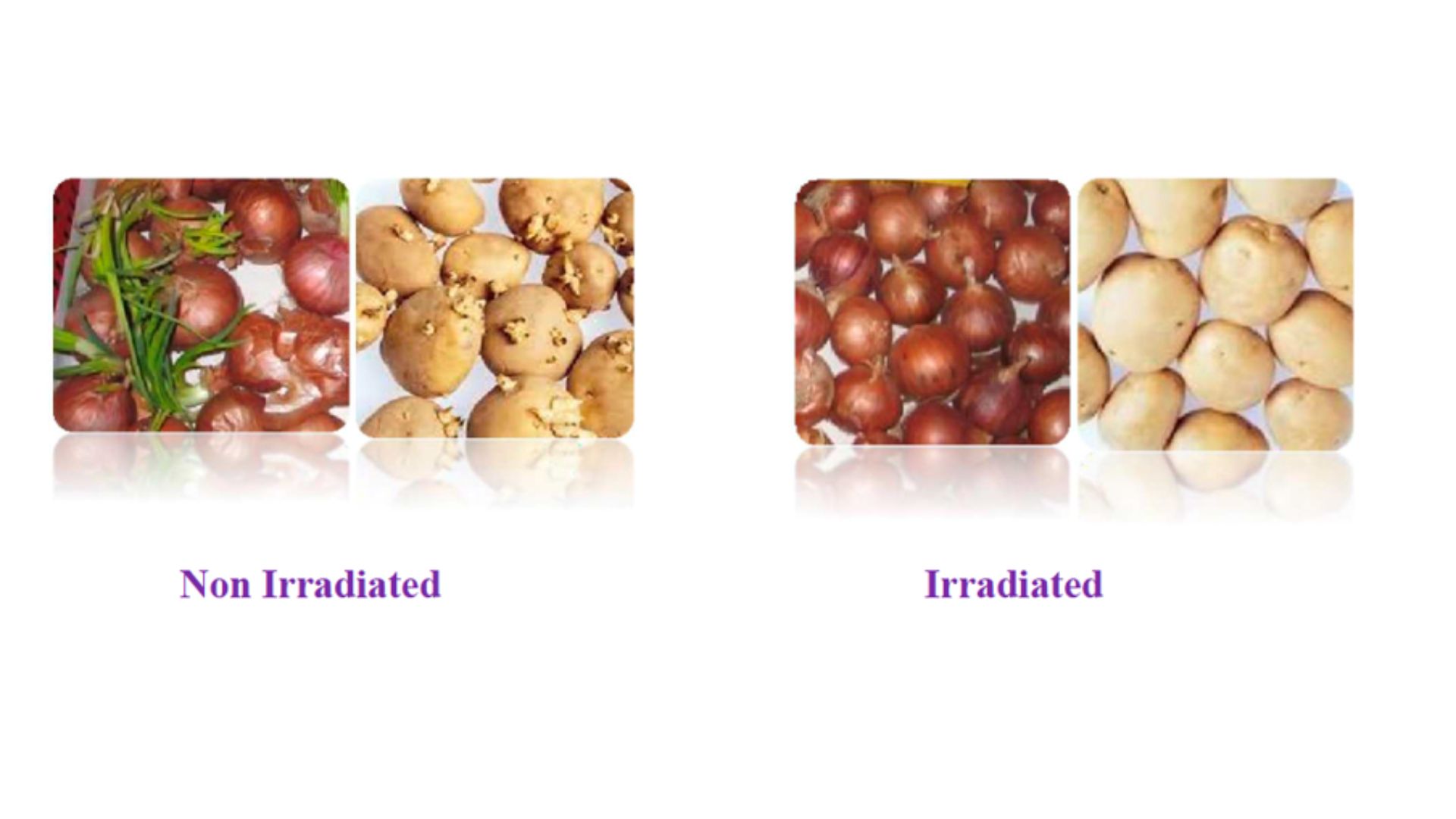
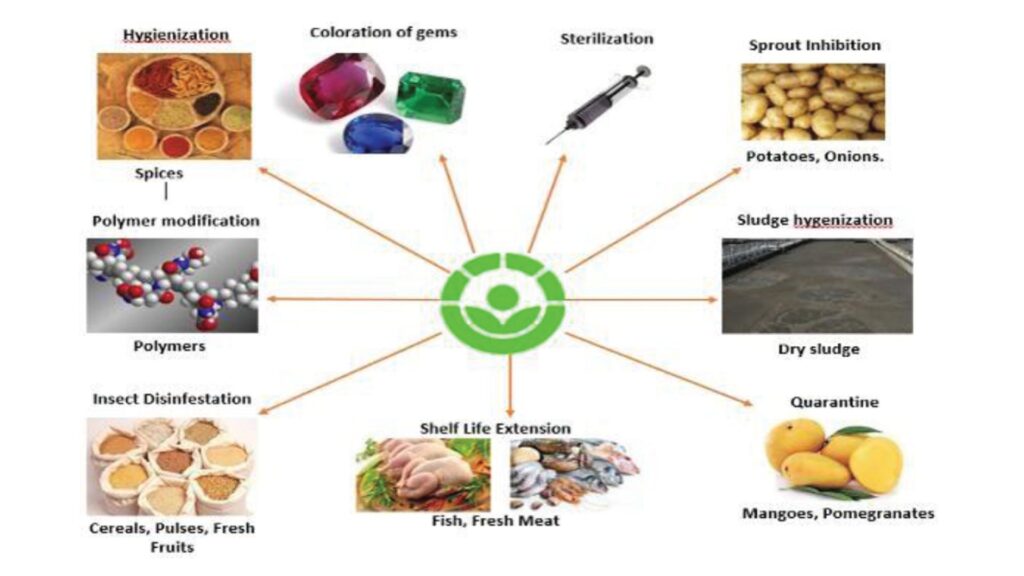
Irradiation in the range of 0.06 to 0.15 kGy inhibits sprouting in tubers (e.g. potato), bulbs (e.g. onion), rhizomes (e.g. ginger) and corms (e.g. taro). In tropical climate chemical sprout inhibitor like maleic hydrazide (MH) and isopropyl-N (3-chlorophenyl) carbamate (CIPC) are not as effective as under subtropical or temperate climates. Conventionally, in commercial cold storage, potato is stored at 2-4 ºC, and removed for sale as and when needed. Though sprouting is inhibited at this temperature, the commodity starts sprouting profusely as soon as it is taken out from the cold storage and as it moves down the supply chain. This can be avoided by using radiation. Moreover, after irradiation (Dmin 100 Gy) potato can be stored at higher temperature of 12-15 ºC for around 6-8 months depending upon the quality of the product.
This not only conserves energy, but also prevents sweetening of potato, commonly occurring at low temperatures. It gives advantage to the manufacturers of chips as the low sugar potato give desired lighter color to fries and chips. Onion (Rabi crop) after irradiation (Dmin 60 Gy) can be stored at 0.5 to 1ºC and 65-68% Relative humidity in a proper ventilated structure for around 6-8 months depending upon the quality of the product.
Low Dose Application
2. Delayed ripening of fruits and vegetables
India is a major producer of tropical fruits and vegetables. The Alphonso and Kesar varieties of mango are popular all over the world and have great export potential. Irradiation of these fruits at hard mature pre-climacteric stage at 0.25 to 0.75 kGy delays the ripening process by about 15 days, thus improving shelf- life. These doses are also effective in destroying quarantine pests. At present, mangoes after radiation treatment as per USDA guidelines are exported to USA by air route. Because of high air transportation cost and limitation of volume, share of Indian mango in the USA remains relatively small and result in low export earnings. Use of sea route for transportation would result in substantial cost reduction and enable export of larger volumes enabling deeper penetration in the USA market. A technology has been developed for delayed ripening of Indian ‘Kesar’ mangoes which will enable its sea-route shipment to USA’. The SOP has been approved by the United States Department of Agriculture (USDA)
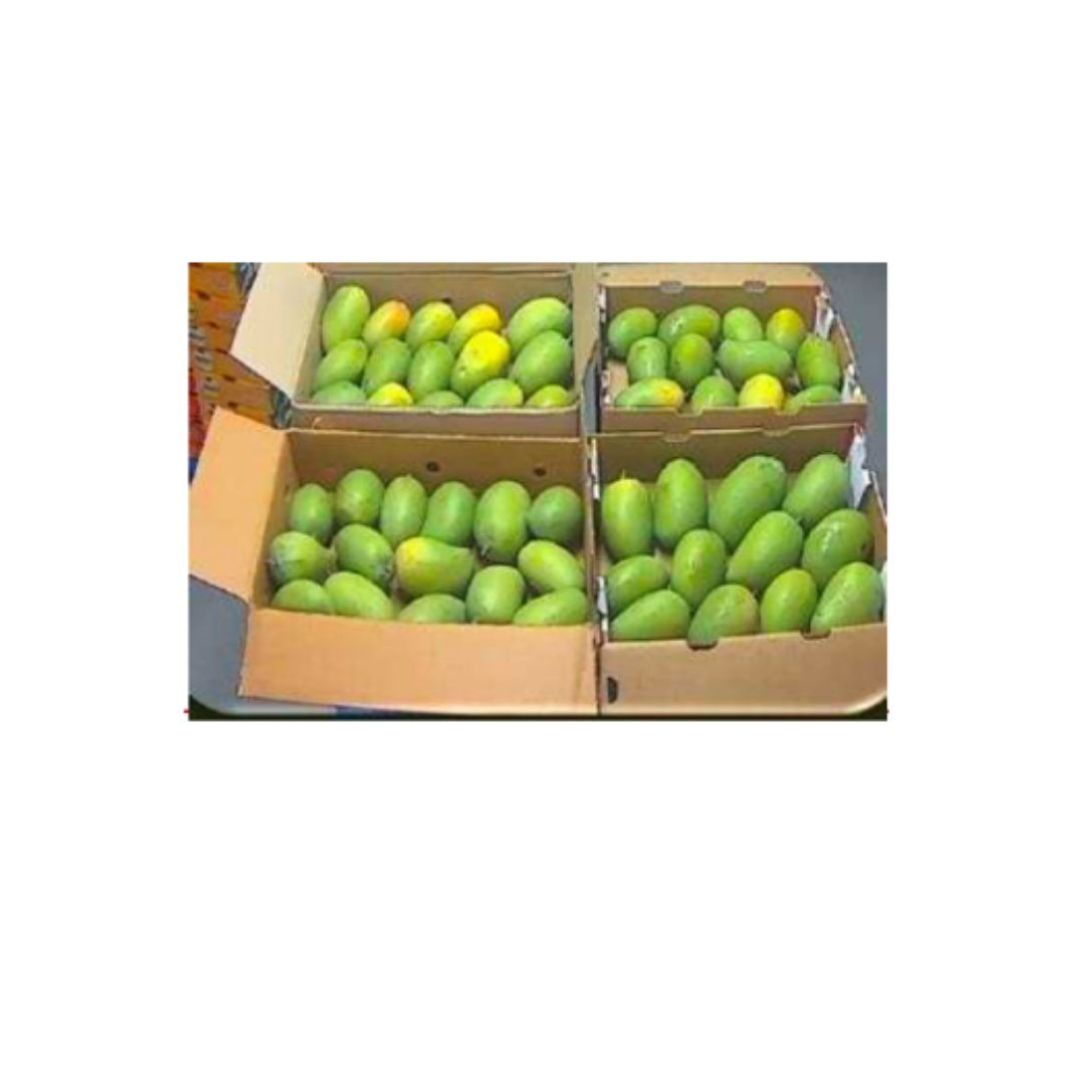
Radiation Treated – Mango
(Shelf Life 35 days in cold storage)
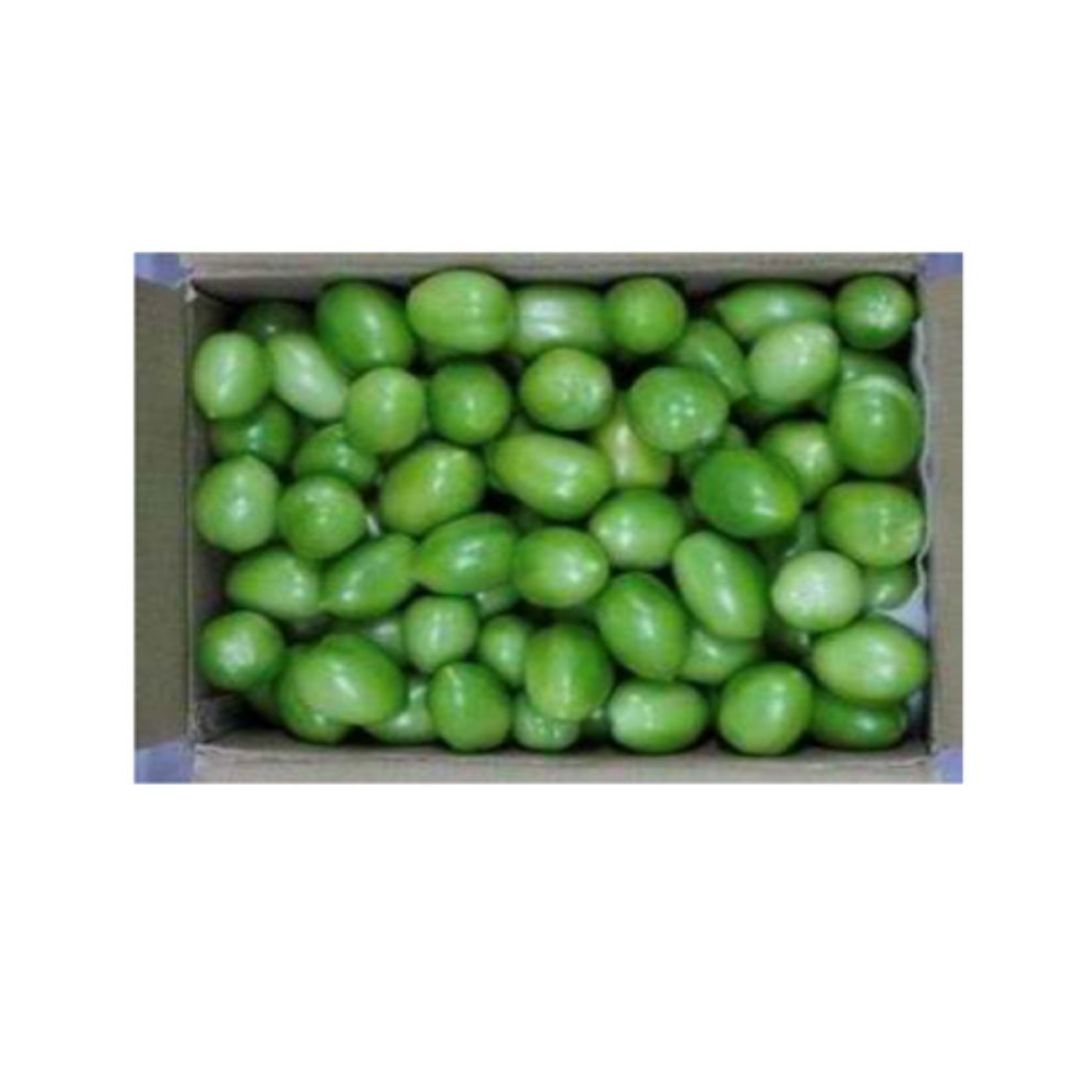
Radiation Treated – Tomato
(Shelf Life 60 days in Cold Storage)
Low Dose Application
3. Radiation processing for "Insect Disinfestations"
Radiation processing for insect disinfestations in grains, pulses and their products, dry fruits and raisins and for quarantine treatment
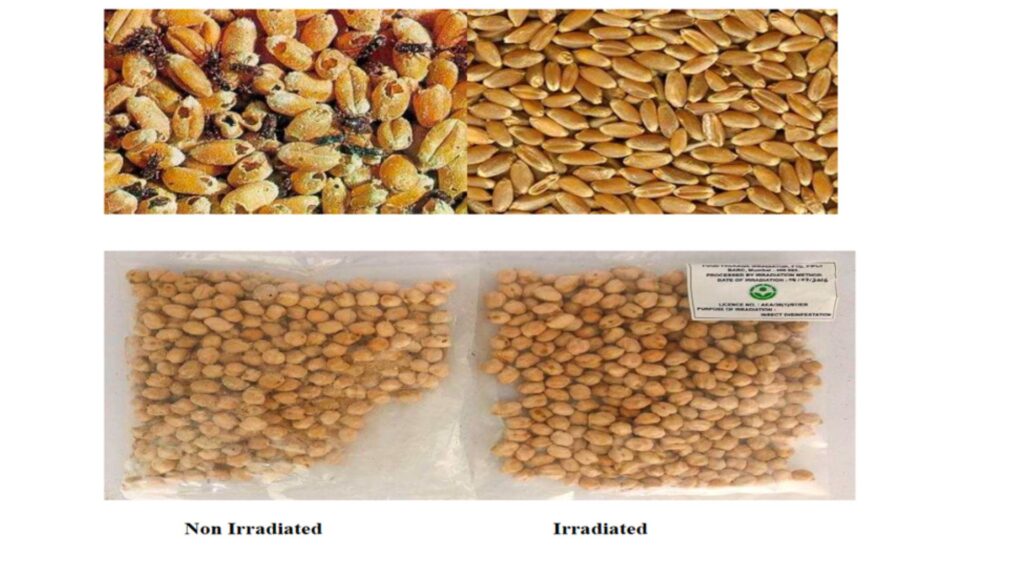
Fresh, as well as stored agricultural commodities are often infested with insect pests and microbial pathogens. Dry cereal grains such as rice, wheat products such as atta, semolina, sooji or rawa, pulses (legumes) and pulse products can be infested with insects. Storage insects severely damage these commodities resulting in huge economic losses. Insect activity also increases moisture content of the commodity and promotes microbial activity. Besides this insect infestation is a major constraint in international trade in agricultural commodities. As fumigants like ethylene dibromide (EDB) and methyl bromide (MB) are being phased out, the role of irradiation as a quarantine treatment is attracting greater attention. This may help boost exports of fresh fruits, vegetables, plantation products and cut flowers.
Medium Dose Applications
Shelf-life extension of sea-foods, meat and meat products and control of pathogens
India is one of the major producers and exporter of sea-foods. With a coastline of over 4500 km, fish production has steadily increased over the years. Fresh catch of fish is prone to rapid spoilage due to improper storage conditions, and contamination with pathogens under usual handling and processing practices. This poses a serious health risk to consumers. Under ice, fish like Bombay duck, pomfret, Indian Salmon, Mackerel, and shrimp can be stored for about 7-10 days. Studies have demonstrated that irradiation at 1-3 kGy followed by storage at melting ice temperatures increases its shelf- life nearly threefold. In India, meat and meat products are marketed either fresh or in frozen form. Meat and meat products including poultry have a shelf-life of about a week at 0-3ºC, which could be extended up to four weeks by applying a dose of 2-5 kGy, which inactivates spoilage bacteria. Radiation treatment has been employed to enhance the shelf-life of intermediate moisture fish and meat products. Frozen fish and shrimp may be contaminated with pathogenic bacteria. Radiation processing can inactivate pathogenic bacteria in pre-packed frozen fish and shrimp. In case of fresh fish and shrimp radiation processing can bring down the microbial load and extend the Shelf-life when kept under refrigeration. In meat and poultry besides pathogenic bacteria the process can also inactivate protozoan and helminths parasites present in these samples and thereby make it safer for human consumption.
High Dose Applications
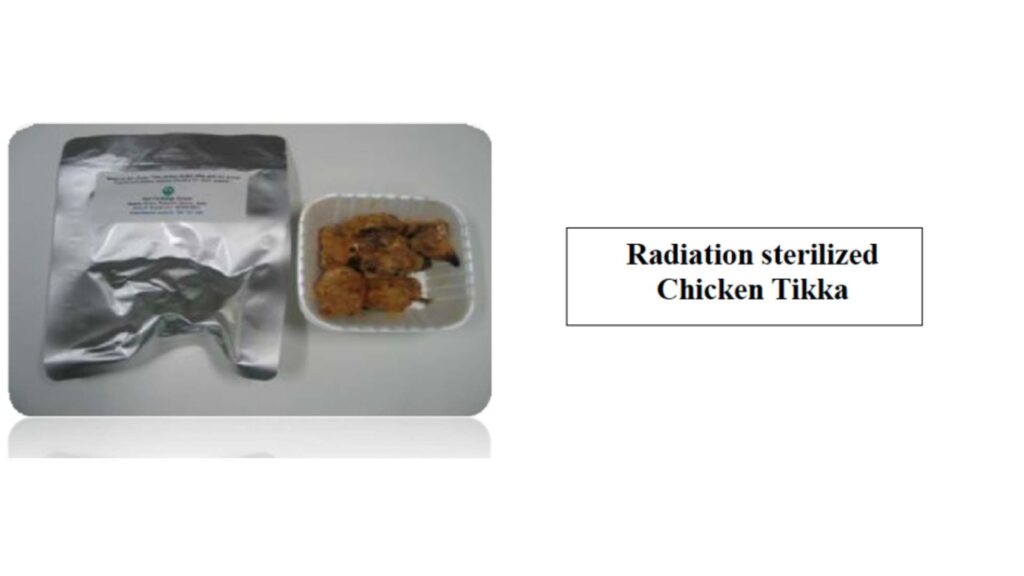
Hygienization of spices: India is a major spice producing and exporting country. However, due to inadequate handling and processing conditions, spices get contaminated with insect eggs and microbial pathogens. When incorporated into semi-processed or processed foods, particularly, after cooking, the microbes, both spoilers and pathogens, in spices can outgrow causing spoilage and posing risk to consumers. Many of the spices develop insect infestation during storage and unscrupulous traders convert them into spice powders. An average absorbed dose of 10 kGy brings about near sterility or commercial sterility while retaining the natural characteristics of spices. Irradiation at higher doses can also be used for total sterilization of diets for immune compromised patients, adventure sports, military and astronauts as well as ensuring safety of Ready to Eat (RTE) foods for calamity affected People. Availability of nutritious, safe and ambient storable meal during calamities is an earnest need. Unpredictable disasters like flood and earthquakes may lead to failure of different logistics and worsen the food supply. A nutritious and safe RTE product ‘Stuffed Baked Food (SBF)’ locally called as ‘Litti’ was developed which upon radiation treatment can be stored for 8 months at ambient temperature. The product was supplied by DAE as a good will gesture for flood and land slide affected people of Himachal Pradesh in the year 2018, Bihar in 2020 and also to various National Disaster Response Force (NDRF) units of the country.
Benefits of Radiation Processing
Globally a significant amount of agricultural produce is lost through postharvest spoilage due to insect infestation, microbial attack and other biological and physical damages. Prevention of postharvest losses can plug the widening gap between food production and requirement. The chemical fumigants like ethylene dibromide (EDB), methyl bromide (MB) and ethylene oxide (ETO) used for the control of insect pests, quarantine treatment of agricultural and horticultural produce and for microbial decontamination of food commodities are being phased out on account of their harmful effects on human health and environment. This is likely to adversely affect the economics of many developing countries through undesirable effects on their exports of fruits, vegetables and spices, unless alternate environment-friendly technologies are made available. Moreover, the radiation technology is very effective for elimination of pathogens and can be applied to pre- packaged commodities even under frozen conditions.
Advantages of Radiation Processing
- Effective alternative to chemical fumigants that endanger human health and environment.
- Being a cold process, it does n o t alter the fresh-like character of a food commodity.
- At recommended doses it maintains sensory qualities, texture, nutritive value and appearance of food.
- Does not produce any toxic residues in food.
- Unlike chemical fumigants irradiation can be carried out in pre-packaged foods and hence pose no risk of post-irradiation contamination.
- Being highly penetrating and effective, large volumes of foodstuffs can be treated very efficiently
- Radiation processing is an eco-friendly treatment and does not pollute environment.
- A single treatment of irradiation suffices to achieve desirable effects.
READY TO BUILD YOUR
RADIATION PROCESSING FACILITY?
Partner with RadiTech for safe, reliable and efficient gamma irradiation solutions.